
Artwork Maintenance & Care Guide
How to protect, clean, store, and recover your artwork in real-world situations
Whether you own a custom pet portrait or a fine art print, a little care goes a long way.
This guide walks you through how to protect your artwork day-to-day, what to do when accidents happen, and when it is time to call a professional.
How to clean and care for a pet portrait or canvas print
If you are caring for cat canvas wall art, a dog portrait, or another custom pet portrait, start with the gentlest option: a clean, dry microfiber cloth or a soft brush. Dust lightly in one direction and stop before you feel any drag on the surface.
Do not use water, steam, glass cleaner, disinfecting wipes, paper towels, or rough fabrics on canvas art. Moisture and pressure can dull the finish, leave stains, or weaken the surface. If a canvas gets wet, lay it flat on a clean surface and air-dry it at room temperature without heat.
Still choosing a piece? Start with the pet portrait guide to pick and preview a photo, then browse pet portrait styles or create a new portrait. Once it is printed or framed, the rest of this article will help you hang, clean, store, and protect it.
Quick answer
- Use a dry microfiber cloth or soft brush every 1-2 months.
- Keep pet portraits out of direct sun, damp rooms, kitchens, and feeding or scratching areas.
- Use secure hanging hardware and keep artwork above tail height.
1. Know What You Own (Start Here)
 Example of different artwork types side by side: canvas, framed print, paper print, metal print, and acrylic print.
Different materials require different care. Before you clean, move, or store anything, identify what type of artwork you have.
Common types
- Canvas print (matte or satin)
- Framed print (with glass or acrylic)
- Paper print (unframed)
- Metal print
- Acrylic print
Why this matters
- Water, pressure, heat, and cleaners affect each surface differently.
- The wrong action can cause permanent damage that even professionals cannot fully reverse.
Once you know what you are working with, you can follow the rest of this guide with confidence and avoid well-intentioned mistakes that might shorten the life of your artwork.
2. Optimal Display Conditions (Prevention > Repair)
 Example of artwork hung in direct sunlight, which should be avoided to prevent fading and surface damage.
Light
Light is one of the biggest long-term threats to artwork. Even when you are using high-quality, UV-resistant inks and materials, constant exposure to strong light slowly fades colors and weakens surfaces over time.
- Avoid direct sunlight at all times.
- Use indirect daylight or LED lighting that is UV-free.
- Rule of thumb: if sunlight touches it at any point during the day, move it.
Temperature & humidity
 A simple humidity and temperature gauge placed near artwork to help you monitor safe conditions.
Temperature and humidity quietly shape how your artwork ages. Stable, moderate conditions help keep canvases tight, papers flat, and frames aligned, while extremes can cause warping, mold, and other permanent damage.
Ideal range: 18–24°C (65–75°F), 40–55% humidity.
Avoid:
- Bathrooms
- Kitchens
- Fireplaces
- Exterior walls
What goes wrong
- High humidity → mold, canvas sagging.
- Dry heat → cracking, warping.
A good rule is to treat your artwork like you would a musical instrument or a favorite piece of furniture: if a room feels damp, stuffy, or overly hot to you, it is probably not the best place for long-term display.
3. Hanging & Mounting (Most Damage Happens Here)
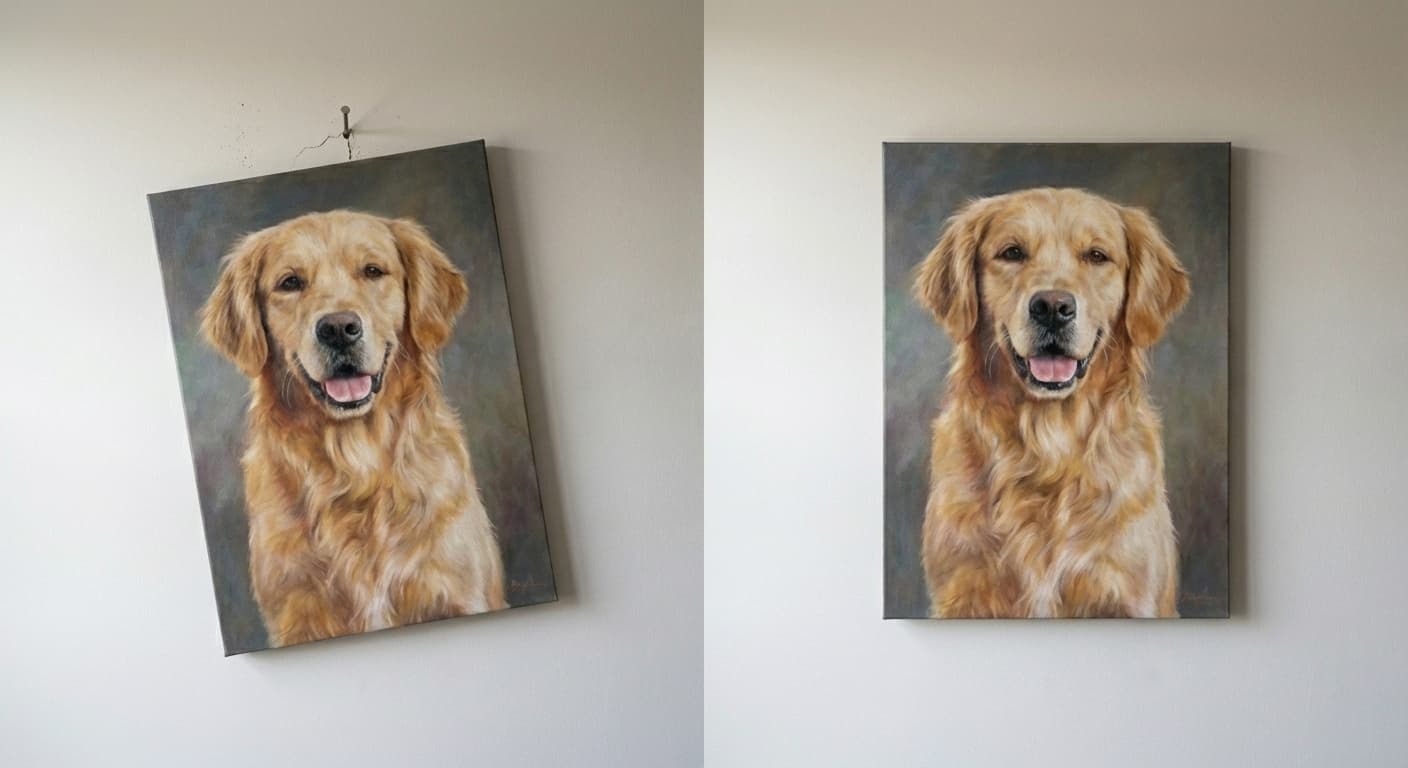 Correct versus incorrect hanging methods, including using two hooks and wall anchors for heavier pieces.
Wall mounting
- Use two hooks for medium and larger sizes to prevent tilt and stress.
- Never hang large canvases from a single nail.
- Use wall anchors; drywall alone is often insufficient.
Framed art
- Ensure bumpers on frame corners to allow airflow.
- Never let frames sit completely flush against the wall.
Taking a few extra minutes to hang your artwork correctly prevents the most common accidents: sudden falls, cracked frames, and slowly stretching canvases. Once it is secure, you can enjoy it without worrying every time someone closes a door a little too hard.
4. Routine Cleaning (Dust Is the Enemy)
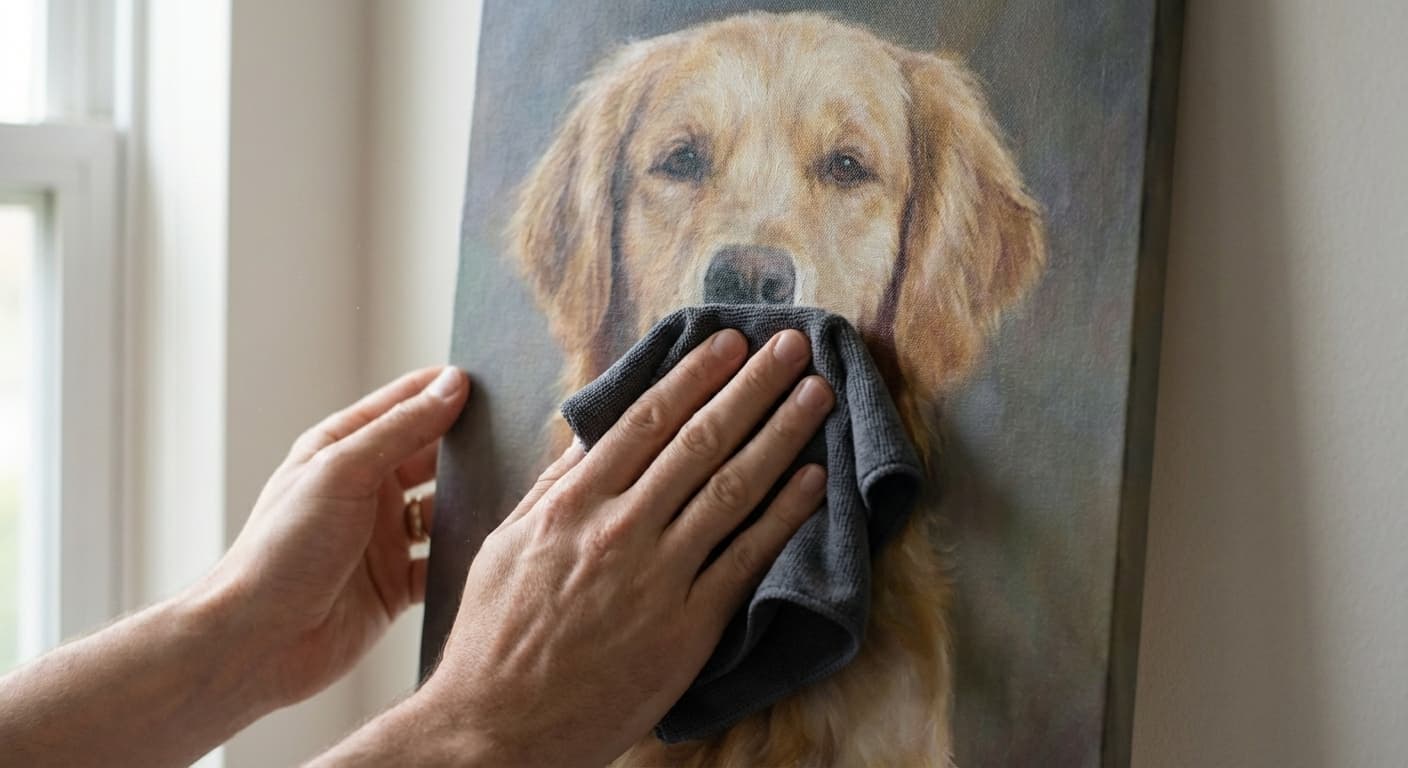 Gently dusting a canvas with a clean microfiber cloth using light, single-direction strokes.
Dust builds up slowly but can dull colors and, over time, work its way into the surface of your artwork. Gentle, regular cleaning keeps your piece looking fresh without introducing moisture or harsh chemicals.
Canvas prints
Frequency: every 1–2 months.
How to clean
- Use a clean, dry microfiber cloth or soft brush.
- Apply light pressure only.
- Wipe in one direction; do not scrub.
Never use
- Water or damp cloths.
- Cleaning sprays or chemicals.
- Paper towels or rough fabrics.
A quick, gentle dusting session is all your canvas needs. If you ever feel tempted to “deep clean” with liquid cleaners, it is usually a sign to stop and ask a professional for advice instead.
Framed prints (glass or acrylic)
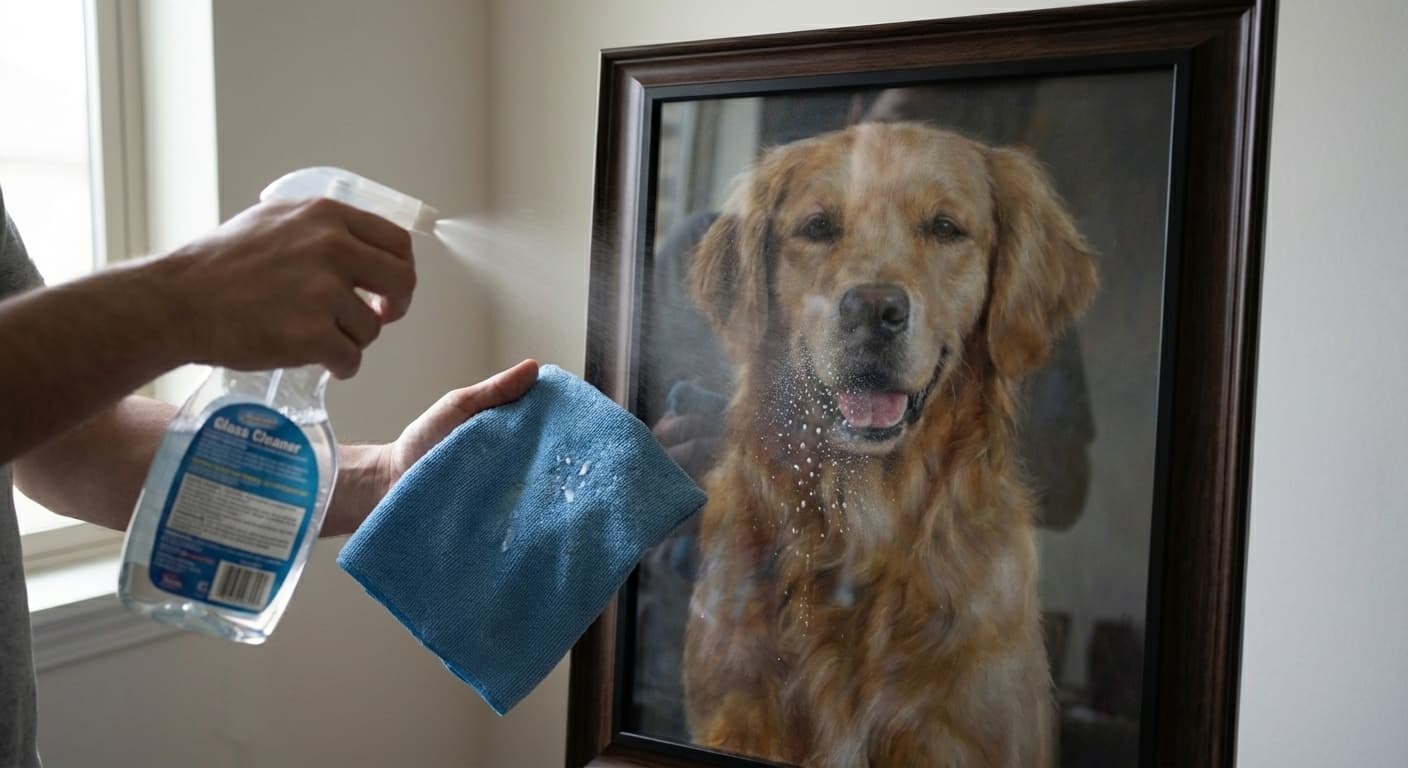 Cleaning the glass of a framed piece by spraying cleaner onto the cloth, not directly onto the surface.
How to clean
- Spray cleaner onto the cloth, never directly onto the glass or acrylic.
- Wipe gently and evenly.
- Dry immediately to avoid streaks or seepage under the frame.
Tip: Acrylic scratches easily - use acrylic-safe cloths only.
If you notice moisture or cleaner seeping under the frame, stop and let everything dry completely. Persistent fogging, streaks, or trapped moisture are good reasons to have the piece opened and checked by a framer.
5. Accident Scenarios & What To Do Immediately
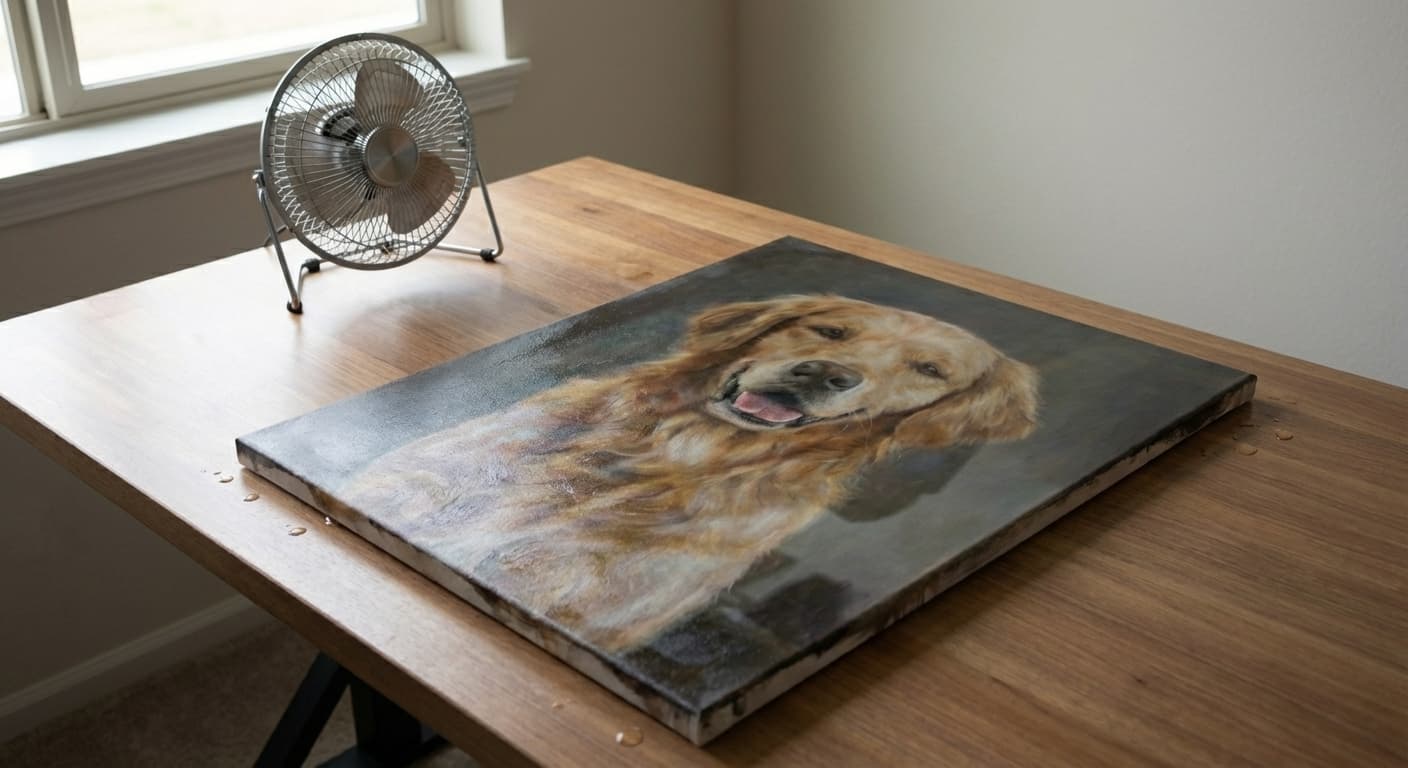 Example of visible water damage on artwork, showing staining and warping that require careful handling.
If it gets wet (spills, humidity, leaks)
Do this immediately
- Lay the artwork flat on a clean, dry surface.
- Air-dry at room temperature.
- Use a fan indirectly if needed (no heat).
Do not
- Use a hair dryer or heater.
- Stack items on top of the artwork.
- Wipe or rub the surface while it is wet.
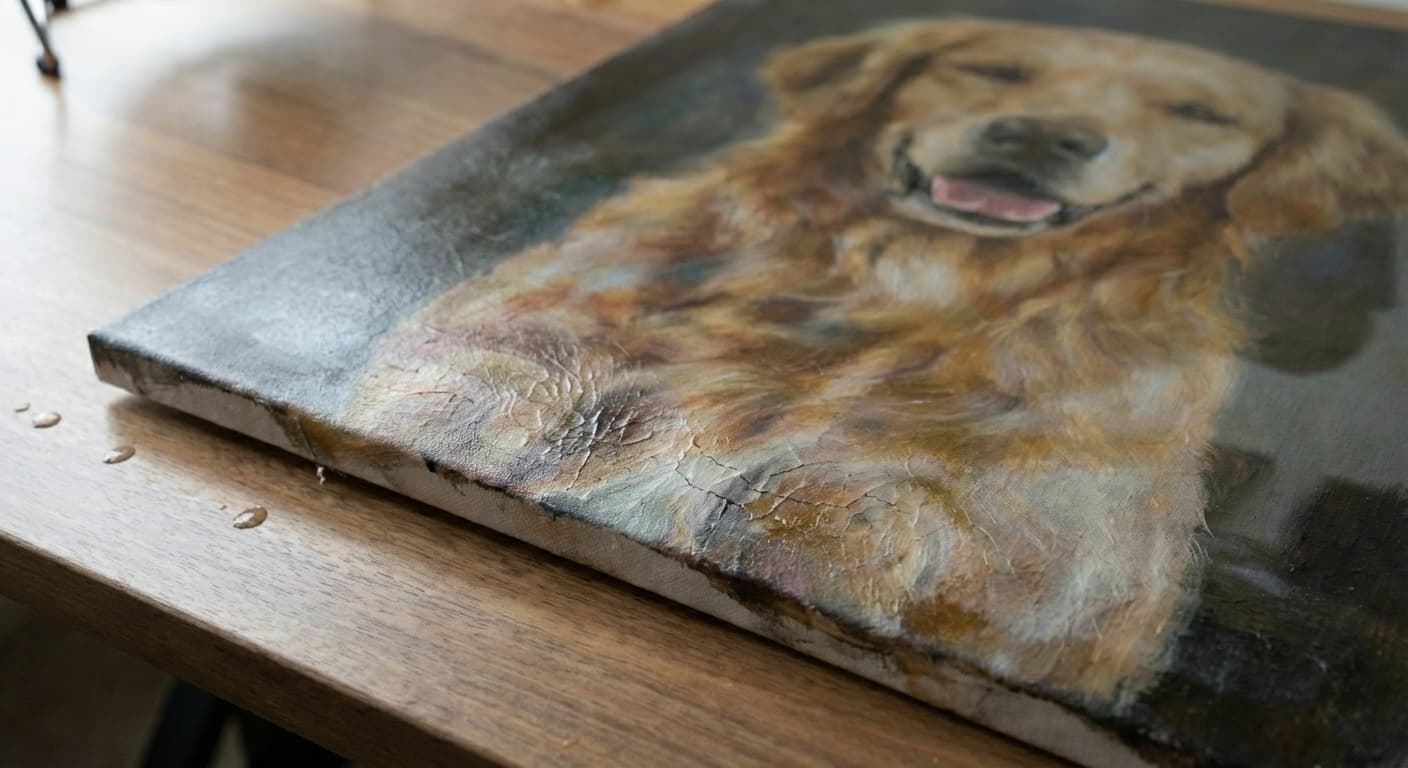 Artwork laid flat on a clean surface to dry naturally after water exposure, without added heat or pressure.
After the piece is completely dry, reassess it in good light. Minor ripples or slight waviness may relax over time, but visible stains, flaking, or surface changes are signs to contact a professional before the damage spreads.
If it falls or gets bent
 Close-up of a bent print corner, showing the kind of crease that should not be flattened at home.
- Do not attempt to flatten deep creases yourself.
- Remove the artwork from the frame carefully if the frame is damaged.
- Consult a professional if you see cracks, tears, or severe warping.
Light bends in a frame or backing can sometimes be corrected, but once the print surface itself is creased or cracked, home fixes often make things worse. When in doubt, pause and get expert advice before trying to “smooth it out.”
If mold or mildew appears
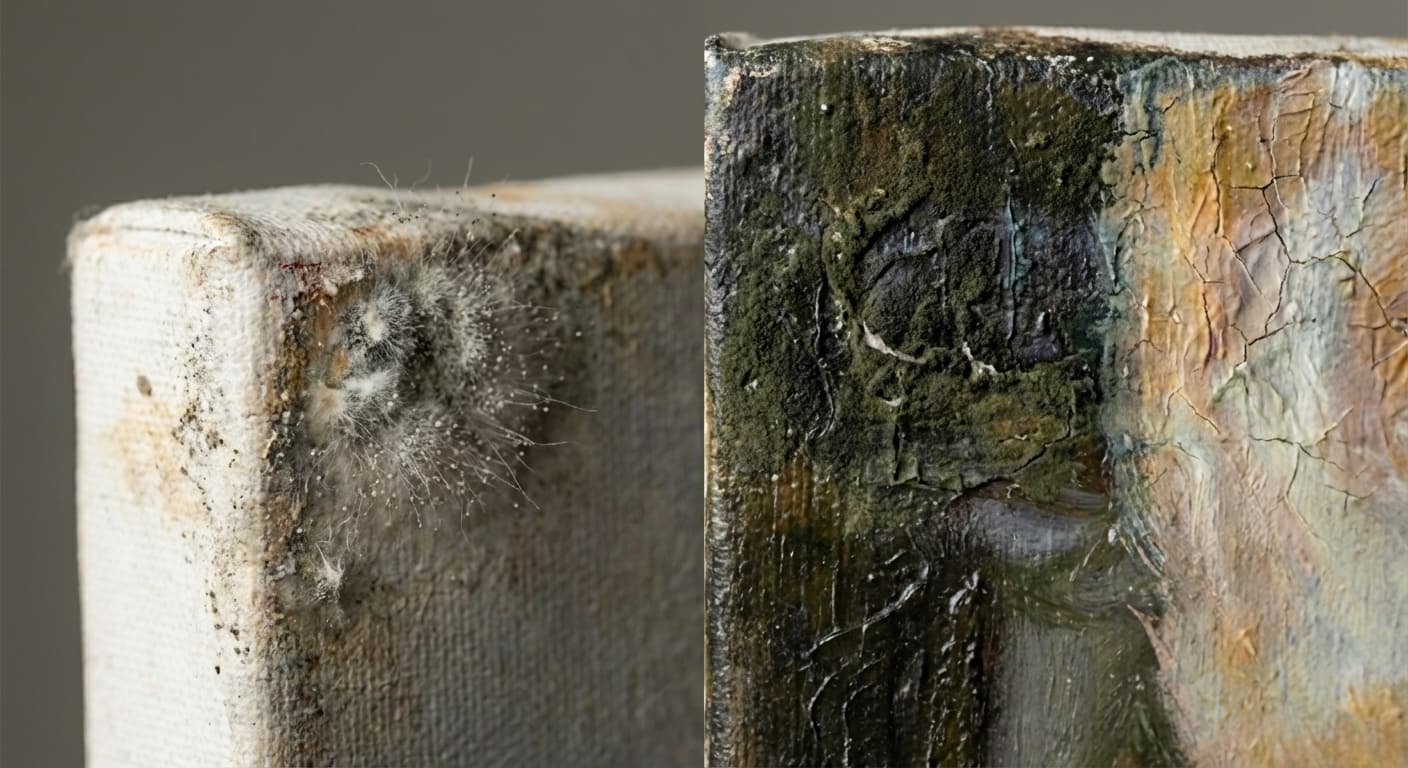 Early mold spots on an artwork surface, which should be isolated and assessed by a conservator.
- Isolate the artwork immediately from other pieces.
- Do not brush, wipe, or vacuum the surface.
- Contact a professional conservator as soon as possible.
Health note: mold spores are hazardous - handle with care and avoid breathing close to the surface.
6. Long-Term Storage (Moving, Renovations, Off-Season)
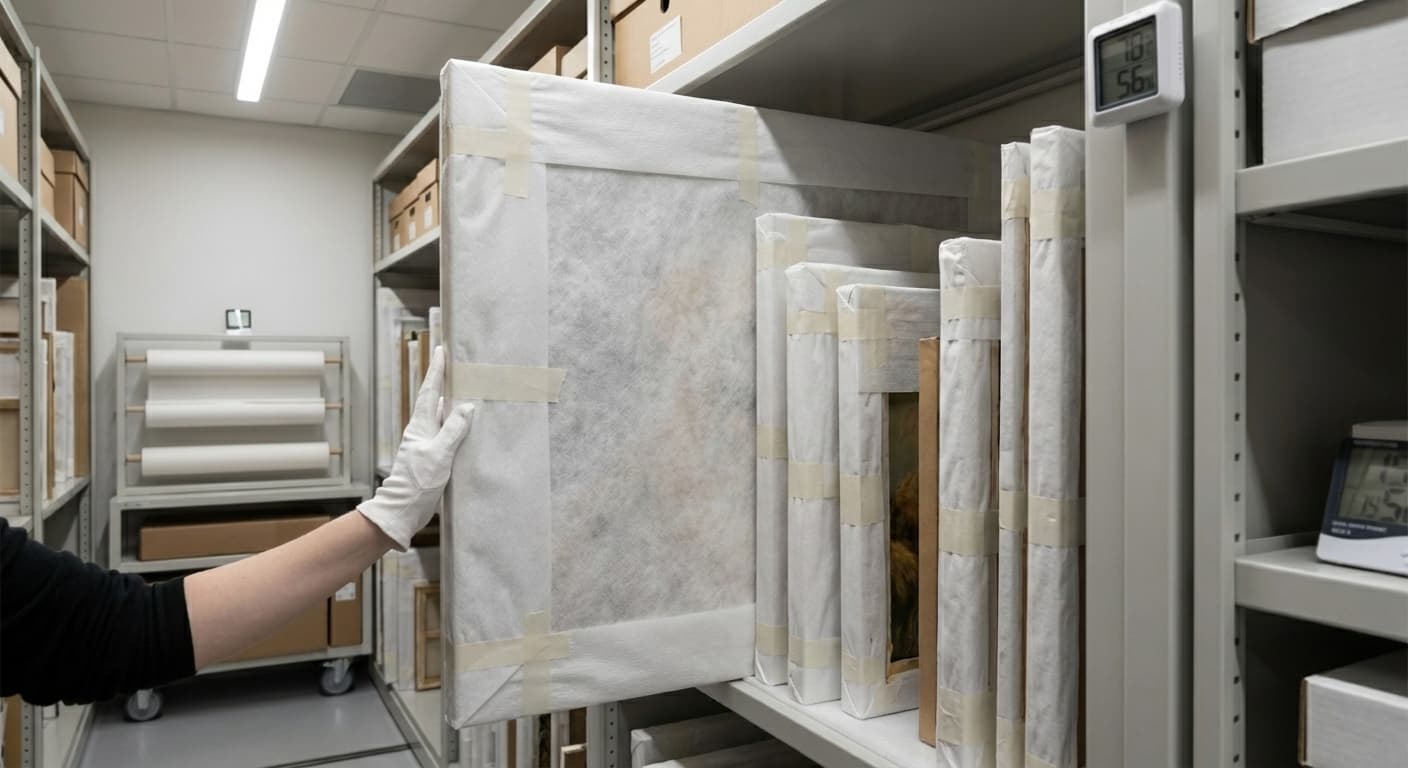 Example of archival storage with artwork kept upright in acid-free materials in a climate-controlled space.
Short-term storage (weeks-months)
- Wrap artwork in acid-free paper.
- Store vertically, never flat in stacks.
- Keep in a climate-controlled room away from exterior walls.
Long-term storage (months-years)
- Use archival sleeves, folders, or boxes sized to the artwork.
- Add silica gel packets to help control moisture.
- Check the condition every 6 months.
Never store
- In basements or crawl spaces.
- In attics or garages.
- In plastic wrap directly against the artwork.
A little planning goes a long way. Treat stored artwork like something you intend to display again: keep it labeled, upright, and easy to access so you can check on it periodically instead of forgetting it in a damp corner.
7. Transporting Artwork Safely
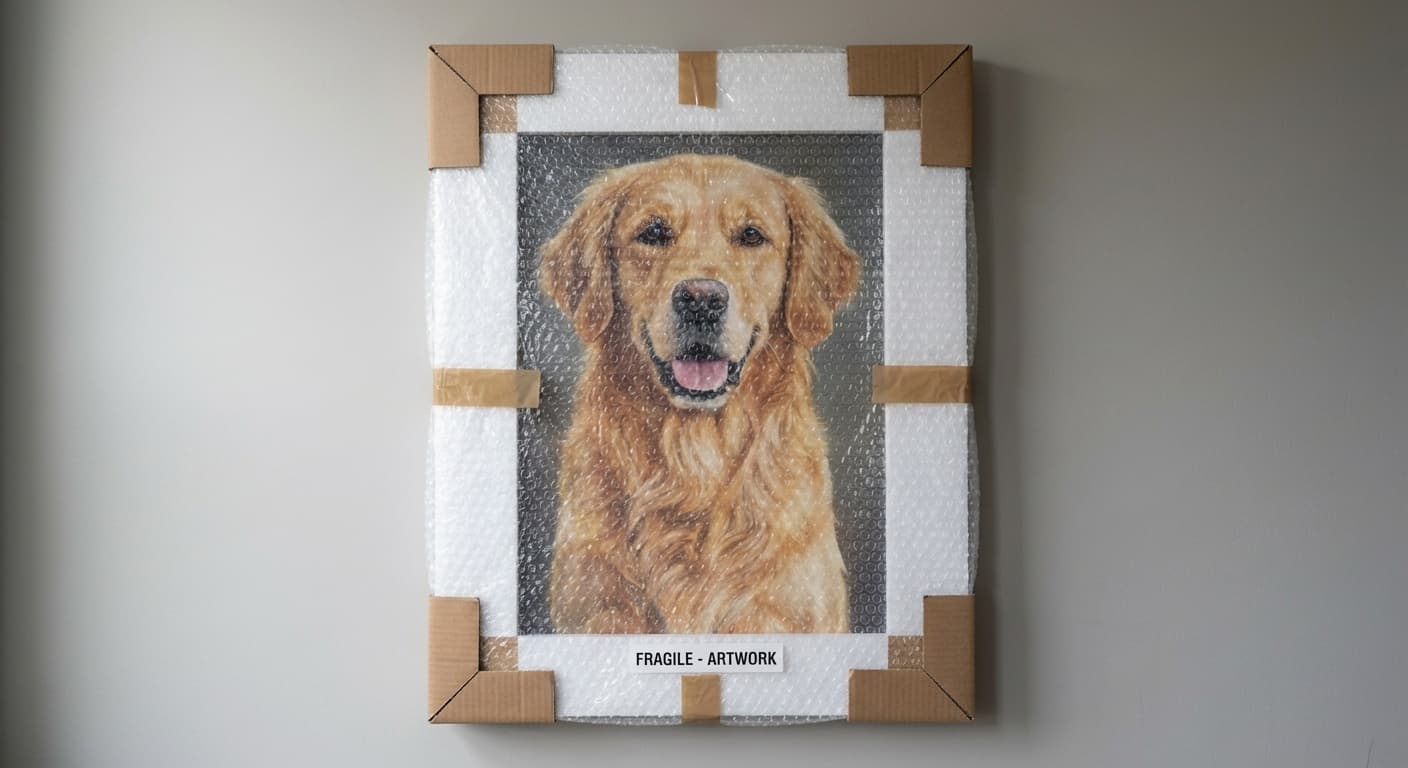 Properly packed artwork with rigid boards, bubble wrap, and corner protection ready for safe transport.
Small to medium pieces
- Place rigid cardboard on both the front and back.
- Wrap with bubble wrap facing outward only (smooth side toward the artwork).
- Keep pieces vertical during transport.
Large canvases
- Use corner protectors to shield vulnerable edges.
- Add foam board backing for extra rigidity.
- Transport inside the vehicle interior only - avoid trunk heat or extreme cold.
Before you drive off, make sure nothing can slide into or press against the artwork. A few extra layers of protection and a snug, upright position can be the difference between a safe arrival and a dented frame.
8. Pets, Kids, and Daily Life
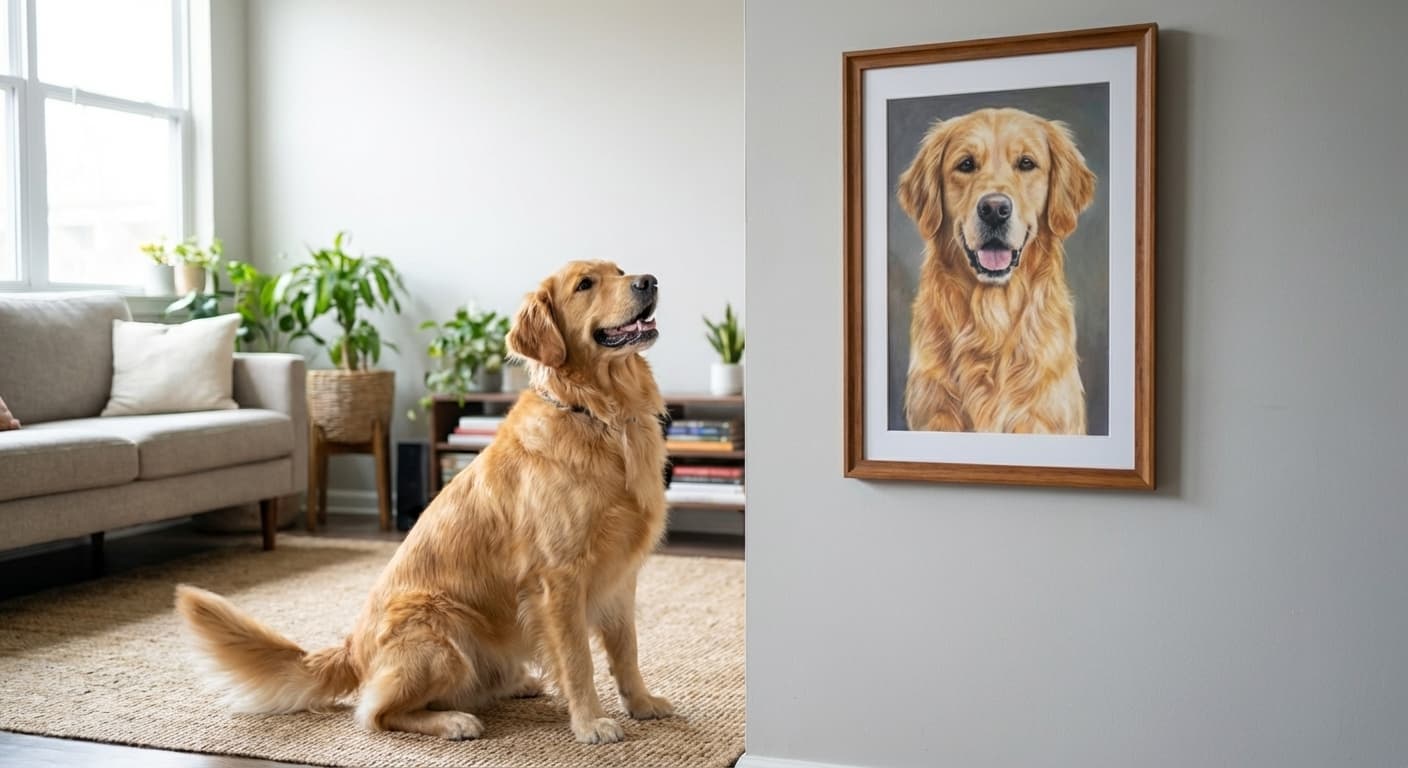 Artwork hung above tail height so pets can relax nearby without bumping or scratching the frame.
Pets
- Keep artwork above tail height to avoid accidental bumps.
- Avoid hanging near litter boxes, feeding areas, or favorite scratching spots.
Children
 Child-friendly living room setup with securely mounted artwork and shatter-resistant glazing.
- Use shatter-resistant acrylic instead of glass where possible.
- Secure frames with wall safety hooks or anti-tip hardware.
The goal is not to make your home feel like a gallery - just to place artwork where it can be enjoyed without becoming a target for wagging tails, curious hands, or flying toys.
9. When to Seek Professional Help
 A professional conservator examining artwork under good lighting to assess damage and treatment options.
Contact a conservator or professional framer if you notice:
- Cracking paint or print surface.
- Mold, mildew, or strong musty odors.
- Water stains that do not fade after careful drying.
- Warping, buckling, or separation from the frame or backing.
Cost note: early intervention is dramatically cheaper than full restoration and often leads to better results.
Pet Portrait Care FAQ
How do I clean a pet portrait or canvas print?
Dust it with a clean, dry microfiber cloth or soft brush. Use light pressure, move in one direction, and avoid water, sprays, paper towels, and rough fabrics.
Can I use water on canvas wall art?
No. Water, steam, damp cloths, and cleaning sprays can stain, warp, or weaken canvas wall art. If the piece gets wet, lay it flat and air-dry it at room temperature.
Where should I hang pet portrait art?
Choose a stable indoor wall away from direct sun, bathrooms, kitchens, fireplaces, litter boxes, feeding areas, and favorite scratching spots. Keep the piece above tail height and mount it securely.
10. Quick Reference Cheat Sheet
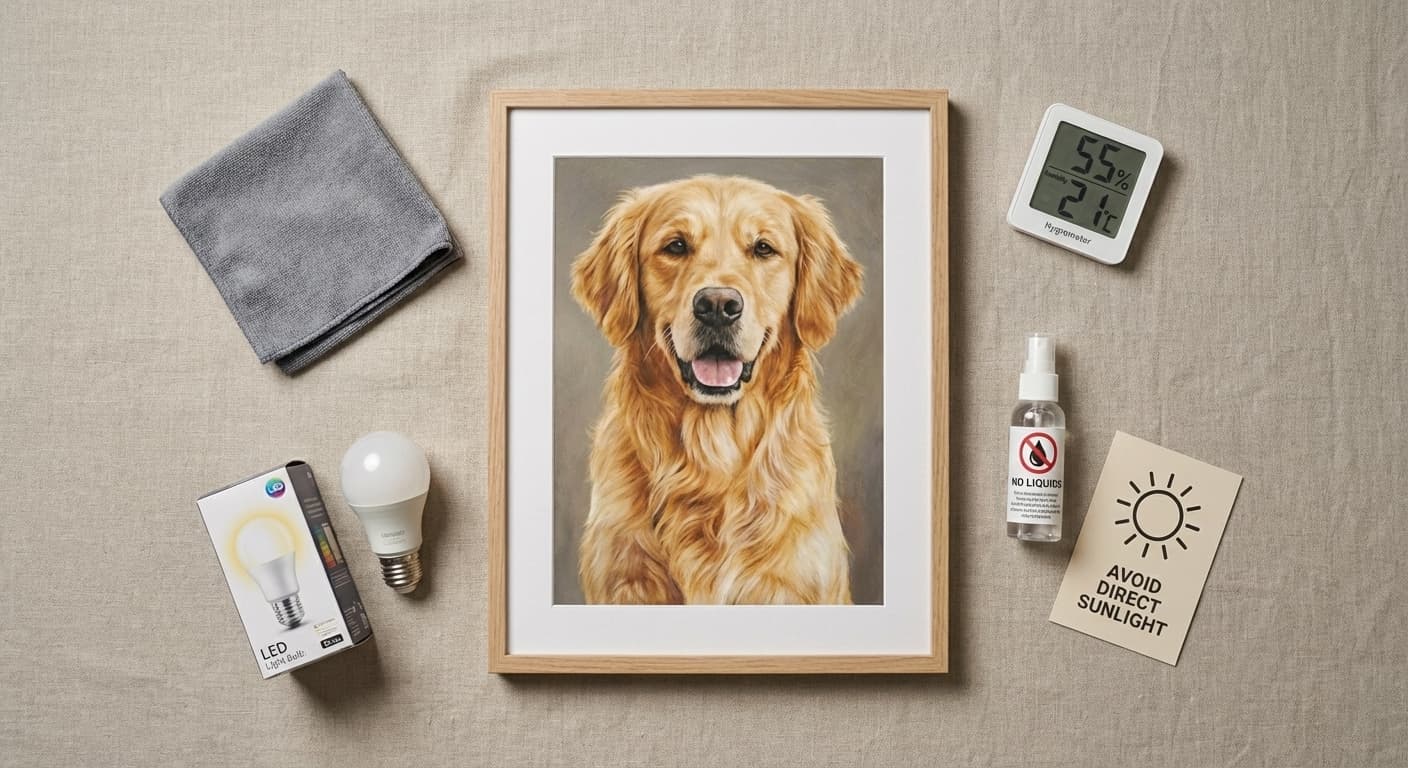 Simple visual checklist summarizing safe and unsafe conditions for displaying and caring for artwork.
Safe
Keep these habits in mind for everyday care:
- Microfiber cloth or soft brush.
- Indirect LED light.
- Stable, climate-controlled rooms.
Unsafe
- Water or steam.
- Harsh chemicals or glass cleaners on canvas or paper.
- Direct sun or heat sources (radiators, fireplaces, heaters).
With a bit of awareness and a few good habits, your artwork can stay vibrant and structurally sound for many years. If you ever have questions about caring for a specific piece from Art in a Sec, we are always happy to help.